College Info Advisor

Role

Co-founder / Product Designer

Role

Co-founder / Product Designer

Role

Co-founder / Product Designer

COMPANY

Leucent

COMPANY

Leucent

COMPANY

Leucent

Area

Growth Design

Area

Growth Design

Area

Growth Design

This case study details how a focus on lead quality over volume transformed Leucents growth trajectorytripling revenue to a cumulative $9M over three years

Summary

Summary

Summary

Our company, Leucent, was great at getting people to click on ads and sign up. The problem? Very few of these sign-ups were turning into actual customers for our clients (the advertisers who pay our bills). Key advertisers were frustrated and ready to leave, putting our entire business at risk.

As the co-founder and designer, I led a complete overhaul of our approach. We stopped guessing and started listening to what potential customers and our advertisers actually needed. By focusing on building a trustworthy and helpful experience, we changed our system from one that generated a high volume of clicks to one that delivered high-quality, ready-to-buy customers.

The results were dramatic:

  • Opt-in rates (the percentage of people signing up) increased by 40-60%.

  • Actual client enrollments (the metric that matters) rose by 15-18%.

  • Low-quality leads were cut by 45%.

  • Revenue tripled, reaching a cumulative $9M+ over 3 years.

  • We successfully expanded this model into new industries like healthcare, IT, and finance.

Our company, Leucent, was great at getting people to click on ads and sign up. The problem? Very few of these sign-ups were turning into actual customers for our clients (the advertisers who pay our bills). Key advertisers were frustrated and ready to leave, putting our entire business at risk.

As the co-founder and designer, I led a complete overhaul of our approach. We stopped guessing and started listening to what potential customers and our advertisers actually needed. By focusing on building a trustworthy and helpful experience, we changed our system from one that generated a high volume of clicks to one that delivered high-quality, ready-to-buy customers.

The results were dramatic:

  • Opt-in rates (the percentage of people signing up) increased by 40-60%.

  • Actual client enrollments (the metric that matters) rose by 15-18%.

  • Low-quality leads were cut by 45%.

  • Revenue tripled, reaching a cumulative $9M+ over 3 years.

  • We successfully expanded this model into new industries like healthcare, IT, and finance.

Our company, Leucent, was great at getting people to click on ads and sign up. The problem? Very few of these sign-ups were turning into actual customers for our clients (the advertisers who pay our bills). Key advertisers were frustrated and ready to leave, putting our entire business at risk.

As the co-founder and designer, I led a complete overhaul of our approach. We stopped guessing and started listening to what potential customers and our advertisers actually needed. By focusing on building a trustworthy and helpful experience, we changed our system from one that generated a high volume of clicks to one that delivered high-quality, ready-to-buy customers.

The results were dramatic:

  • Opt-in rates (the percentage of people signing up) increased by 40-60%.

  • Actual client enrollments (the metric that matters) rose by 15-18%.

  • Low-quality leads were cut by 45%.

  • Revenue tripled, reaching a cumulative $9M+ over 3 years.

  • We successfully expanded this model into new industries like healthcare, IT, and finance.

The Challenge

The Challenge

The Challenge

Our original model was simple: drive traffic to a landing page, get an email, and send the person to one of our partners. On paper, the volume looked good. But things did not look as good as it seemed:

  • Advertisers were losing money. They complained that the leads we sent weren't serious.

  • Enrollment rates weren't great. This eroded our clients' trust in us.

  • Our revenue hit a wall. We were at risk of losing the clients who made up the bulk of our income.

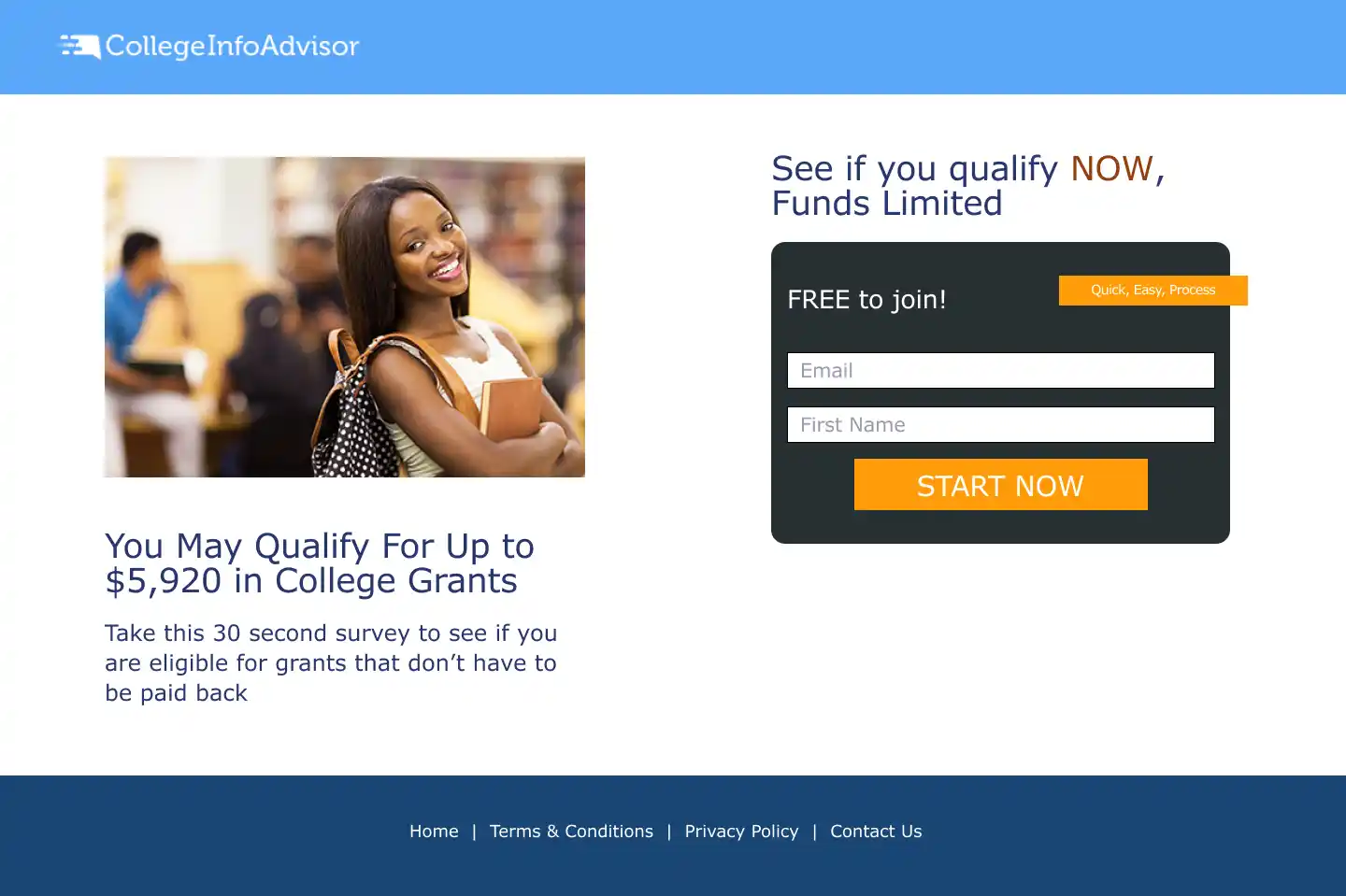
The core issue was a lack of trust. Our landing pages felt generic and transactional. We weren't giving people the information they needed to make a confident decision, so we were attracting clicks, not committed customers. I knew we had to shift our focus from lead volume to lead value.
Our original model was simple: drive traffic to a landing page, get an email, and send the person to one of our partners. On paper, the volume looked good. But things did not look as good as it seemed:

  • Advertisers were losing money. They complained that the leads we sent weren't serious.

  • Enrollment rates weren't great. This eroded our clients' trust in us.

  • Our revenue hit a wall. We were at risk of losing the clients who made up the bulk of our income.

The core issue was a lack of trust. Our landing pages felt generic and transactional. We weren't giving people the information they needed to make a confident decision, so we were attracting clicks, not committed customers. I knew we had to shift our focus from lead volume to lead value.

Our original model was simple: drive traffic to a landing page, get an email, and send the person to one of our partners. On paper, the volume looked good. But things did not look as good as it seemed:

  • Advertisers were losing money. They complained that the leads we sent weren't serious.

  • Enrollment rates weren't great. This eroded our clients' trust in us.

  • Our revenue hit a wall. We were at risk of losing the clients who made up the bulk of our income.

The core issue was a lack of trust. Our landing pages felt generic and transactional. We weren't giving people the information they needed to make a confident decision, so we were attracting clicks, not committed customers. I knew we had to shift our focus from lead volume to lead value.

Original Landing Page

Discovery

From Volume to Value

Discovery

From Volume to Value

Discovery

From Volume to Value

To fix the problem, we had to understand it first. I started a regular process of research to learn what our users were thinking.

  • User Interviews & Surveys: We talked to prospective students to understand their goals, fears, and where they were getting stuck.

  • Campaign Analytics: We dug into the data to see what separated a good lead from a bad one.

⚠️ What We Heard from Prospective Students

A few key themes emerged immediately. People hesitated because of:

  • Financing Unclear: There wasn't alot of clarity on loans, grants and other forms of financing

  • Poor Program Fit: They weren't sure if a program matched their career goals.

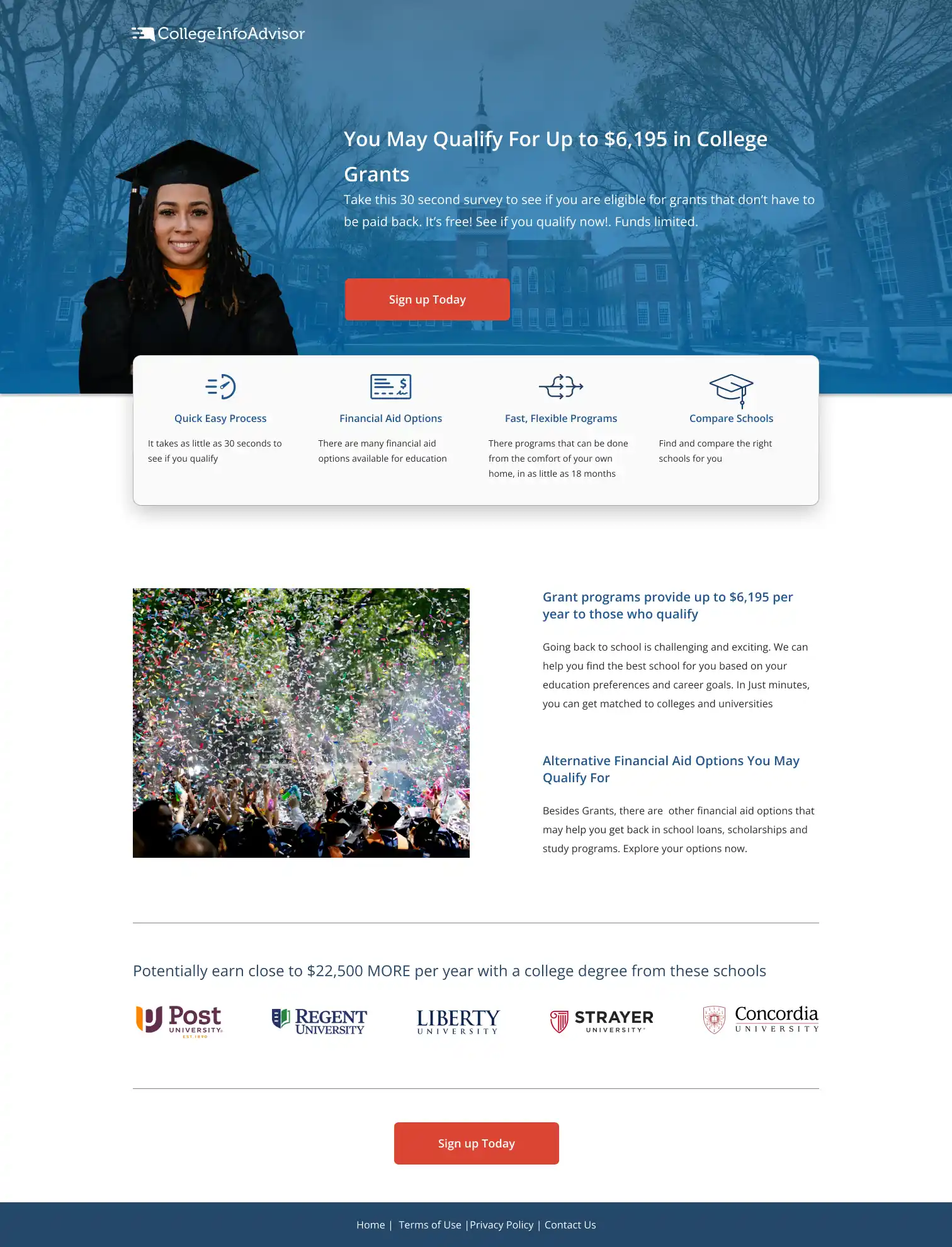
  • Lack of Trust: The site lacked credible logos, testimonials, or details that made it feel legitimate.


To fix the problem, we had to understand it first. I started a regular process of research to learn what our users were thinking.

  • User Interviews & Surveys: We talked to prospective students to understand their goals, fears, and where they were getting stuck.

  • Campaign Analytics: We dug into the data to see what separated a good lead from a bad one.

⚠️ What We Heard from Prospective Students

A few key themes emerged immediately. People hesitated because of:

  • Financing Unclear: There wasn't alot of clarity on loans, grants and other forms of financing

  • Poor Program Fit: They weren't sure if a program matched their career goals.

  • Lack of Trust: The site lacked credible logos, testimonials, or details that made it feel legitimate.


To fix the problem, we had to understand it first. I started a regular process of research to learn what our users were thinking.

  • User Interviews & Surveys: We talked to prospective students to understand their goals, fears, and where they were getting stuck.

  • Campaign Analytics: We dug into the data to see what separated a good lead from a bad one.

⚠️ What We Heard from Prospective Students

A few key themes emerged immediately. People hesitated because of:

  • Financing Unclear: There wasn't alot of clarity on loans, grants and other forms of financing

  • Poor Program Fit: They weren't sure if a program matched their career goals.

  • Lack of Trust: The site lacked credible logos, testimonials, or details that made it feel legitimate.


Persona

Journey Mapping

Pinpointing System Gaps

Journey Mapping

Pinpointing System Gaps

Journey Mapping

Pinpointing System Gaps

Pinpointing System Gaps

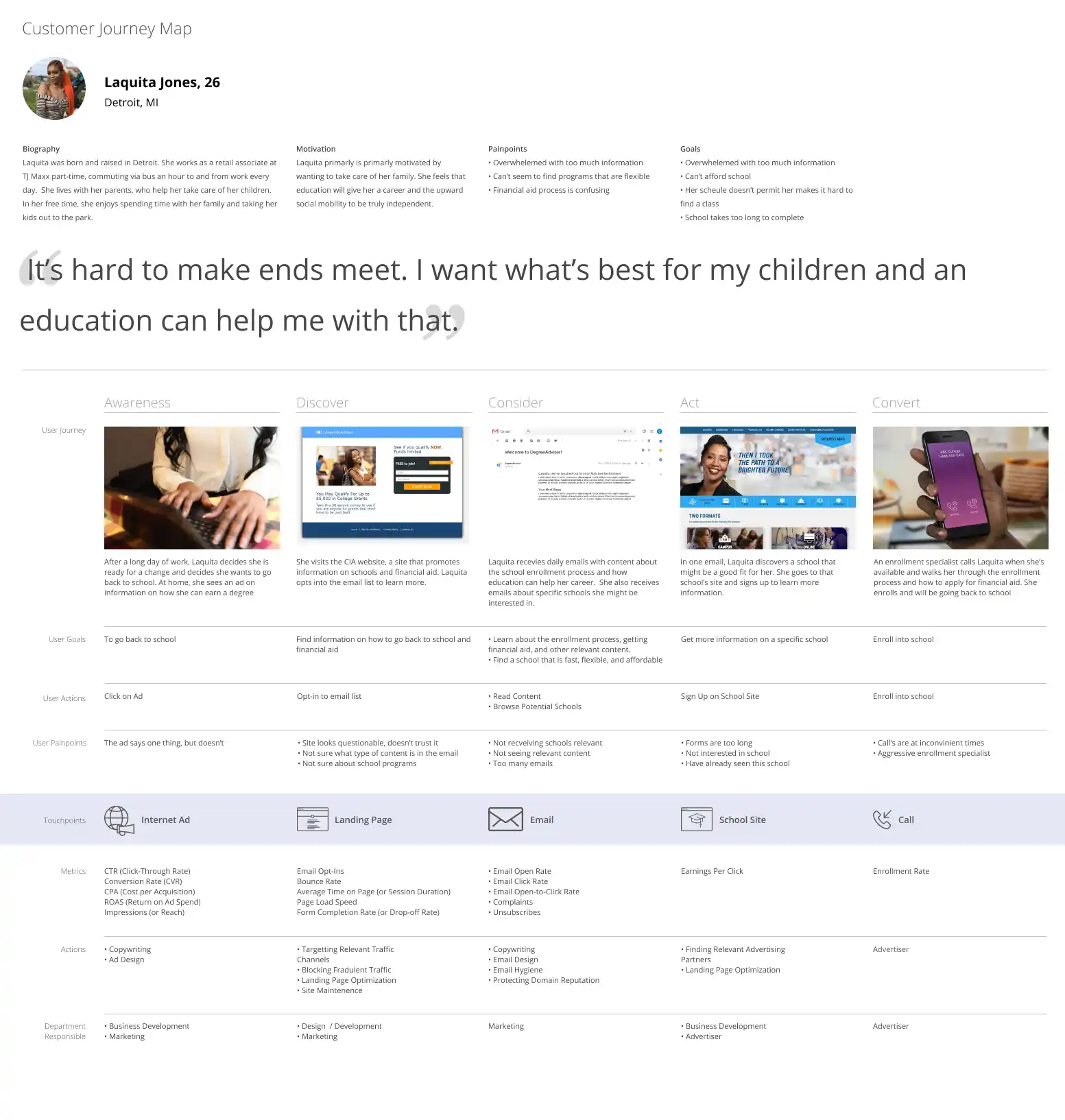
The insights from the user research and personas helped us in creating journey map—a visual story of a user's path from seeing an ad to enrolling in a program. This map showed us exactly where we were failing them and where a better design could make a huge difference

I led the development of detailed journey maps that traced the full path from ad click to enrollment—capturing:

  • User goals and pain points at each stage

  • Business KPIs tied to drop-off or conversion

  • Team ownership across key touchpoints (ads, landing pages, email, follow-up)

This cross-functional view exposed critical friction points:

  • Vague or generic messaging early in the funnel

  • Form-stage drop-offs driven by trust issues or perceived effort

  • Post-signup confusion due to programs not relevant to users

Visualizing the experience this way helped the team see where we were leaking value—and where targeted UX improvements could drive both user success and business growth.

It also allowed us to shift from short-term patches to long-term systems thinking—designing solutions across the full journey, not just tweaking the front end.

Pinpointing System Gaps

The insights from the user research and personas helped us in creating journey map—a visual story of a user's path from seeing an ad to enrolling in a program. This map showed us exactly where we were failing them and where a better design could make a huge difference

I led the development of detailed journey maps that traced the full path from ad click to enrollment—capturing:

  • User goals and pain points at each stage

  • Business KPIs tied to drop-off or conversion

  • Team ownership across key touchpoints (ads, landing pages, email, follow-up)

This cross-functional view exposed critical friction points:

  • Vague or generic messaging early in the funnel

  • Form-stage drop-offs driven by trust issues or perceived effort

  • Post-signup confusion due to programs not relevant to users

Visualizing the experience this way helped the team see where we were leaking value—and where targeted UX improvements could drive both user success and business growth.

It also allowed us to shift from short-term patches to long-term systems thinking—designing solutions across the full journey, not just tweaking the front end.

Pinpointing System Gaps

The insights from the user research and personas helped us in creating journey map—a visual story of a user's path from seeing an ad to enrolling in a program. This map showed us exactly where we were failing them and where a better design could make a huge difference

I led the development of detailed journey maps that traced the full path from ad click to enrollment—capturing:

  • User goals and pain points at each stage

  • Business KPIs tied to drop-off or conversion

  • Team ownership across key touchpoints (ads, landing pages, email, follow-up)

This cross-functional view exposed critical friction points:

  • Vague or generic messaging early in the funnel

  • Form-stage drop-offs driven by trust issues or perceived effort

  • Post-signup confusion due to programs not relevant to users

Visualizing the experience this way helped the team see where we were leaking value—and where targeted UX improvements could drive both user success and business growth.

It also allowed us to shift from short-term patches to long-term systems thinking—designing solutions across the full journey, not just tweaking the front end.

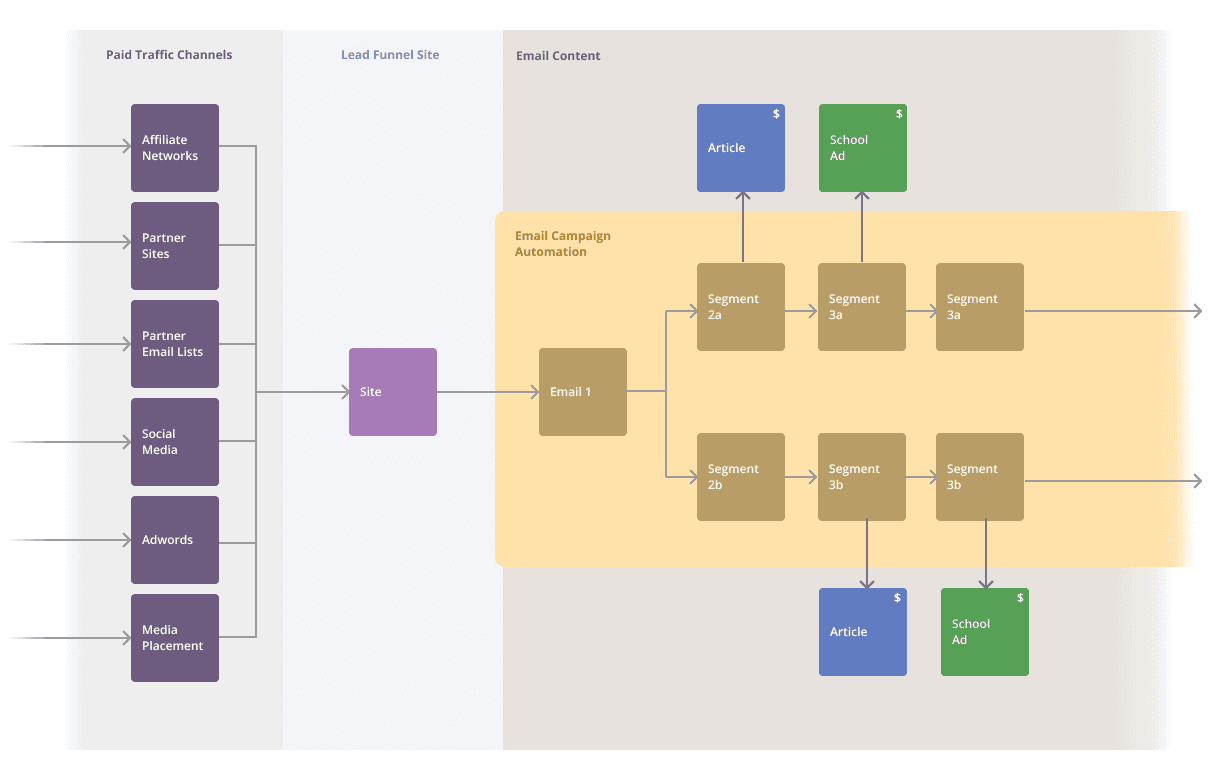
Revenue Model
Journey Maps
Experimentation

Rapid Testing & Iteration

Experimentation

Rapid Testing & Iteration

Experimentation

Rapid Testing & Iteration

Rapid Testing & Iteration on a Live Funnel

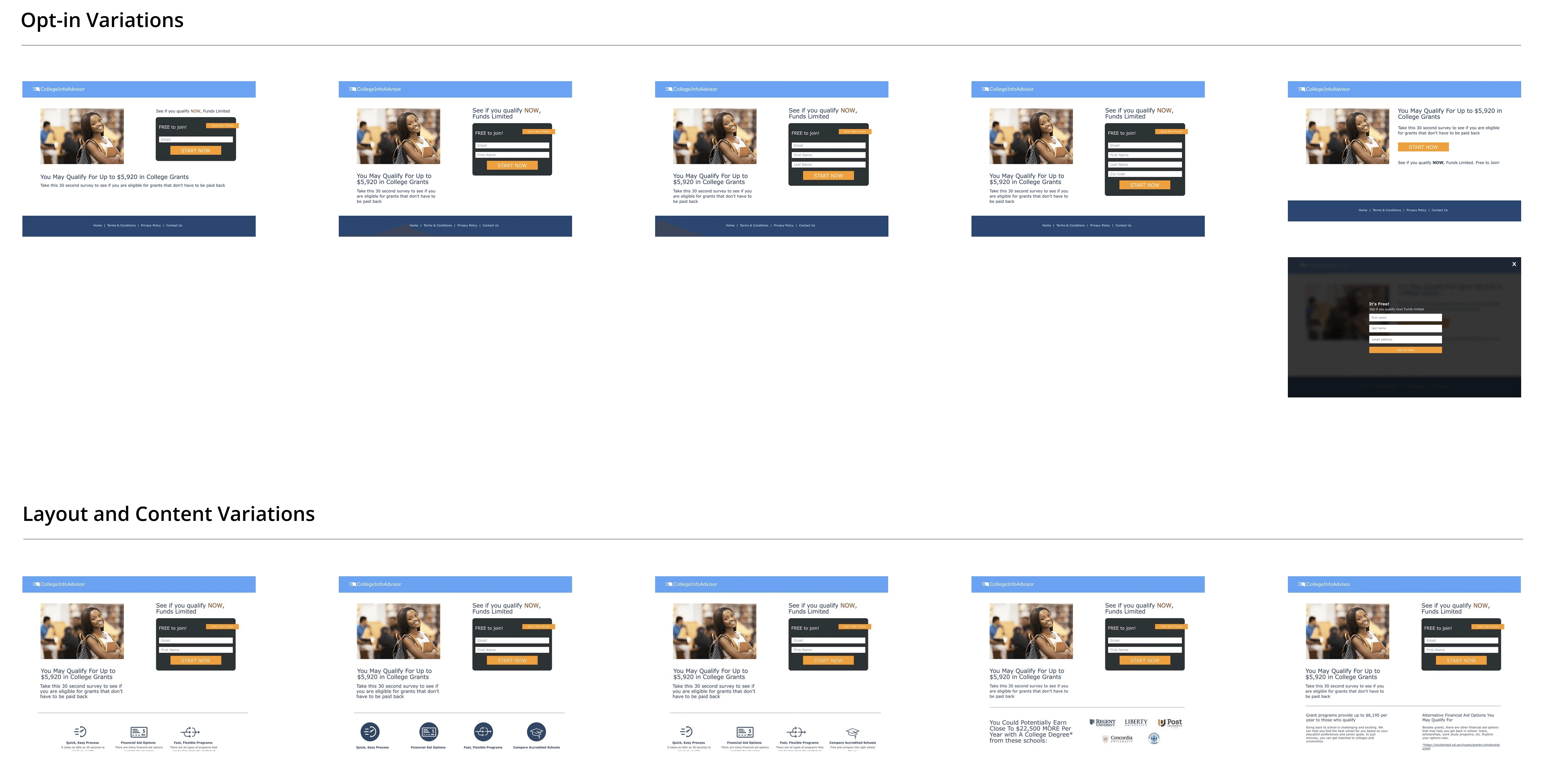
With a live website, we could make changes and see the results almost instantly. We adopted a strategy of rapid, continuous testing on every part of our system.

Here are a few of the small changes that produced big wins:

  • Ad Messaging: We tested hundreds of ad variations. The top-performing ads doubled our click-through rate compared to the originals.

  • Landing Pages: We experimented with adding school logos, student testimonials, and clearer benefit statements. These changes boosted sign-ups by over 10%.

  • Mobile Design: A simple refresh of our mobile site made it easier to use and increased conversions by 10-15%.

Every test gave us evidence. We replaced guesswork with data, allowing us to make compounding gains over time.

Rapid Testing & Iteration on a Live Funnel

With a live website, we could make changes and see the results almost instantly. We adopted a strategy of rapid, continuous testing on every part of our system.

Here are a few of the small changes that produced big wins:

  • Ad Messaging: We tested hundreds of ad variations. The top-performing ads doubled our click-through rate compared to the originals.

  • Landing Pages: We experimented with adding school logos, student testimonials, and clearer benefit statements. These changes boosted sign-ups by over 10%.

  • Mobile Design: A simple refresh of our mobile site made it easier to use and increased conversions by 10-15%.

Every test gave us evidence. We replaced guesswork with data, allowing us to make compounding gains over time.

Rapid Testing & Iteration on a Live Funnel

With a live website, we could make changes and see the results almost instantly. We adopted a strategy of rapid, continuous testing on every part of our system.

Here are a few of the small changes that produced big wins:

  • Ad Messaging: We tested hundreds of ad variations. The top-performing ads doubled our click-through rate compared to the originals.

  • Landing Pages: We experimented with adding school logos, student testimonials, and clearer benefit statements. These changes boosted sign-ups by over 10%.

  • Mobile Design: A simple refresh of our mobile site made it easier to use and increased conversions by 10-15%.

Every test gave us evidence. We replaced guesswork with data, allowing us to make compounding gains over time.

Ads

Landing Page Variations
Visual Design Refresh (Web & Mobile)
Quality Controls

Filtering for Fit

Quality Controls

Filtering for Fit

Quality Controls

Filtering for Fit

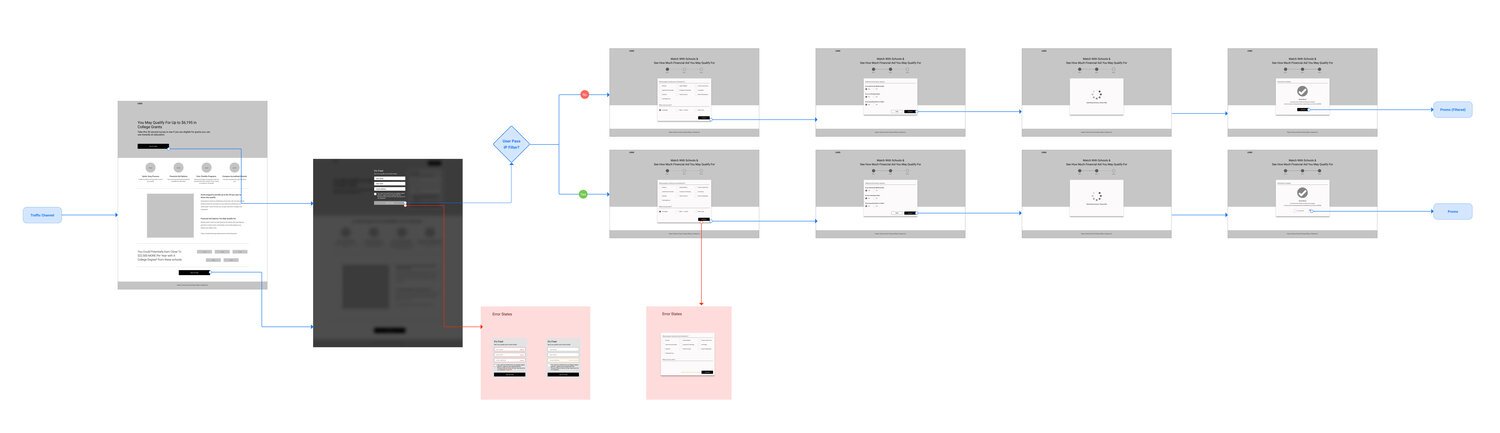
Filtering for Fit, Not Just Volume

To ensure long-term success with advertisers, we rebuilt our lead qualification system—shifting the focus from raw volume to quality.

Core Improvements:

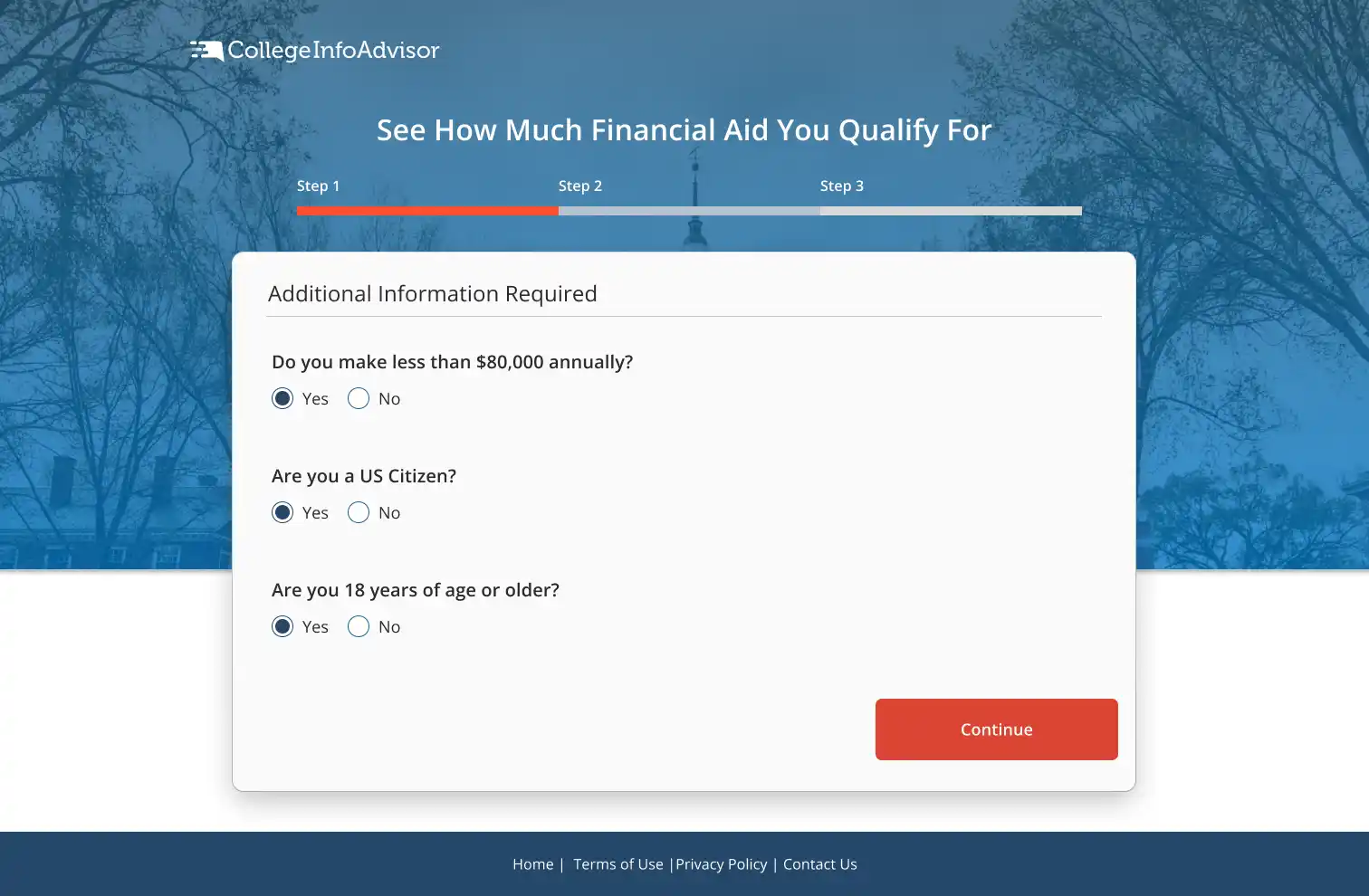
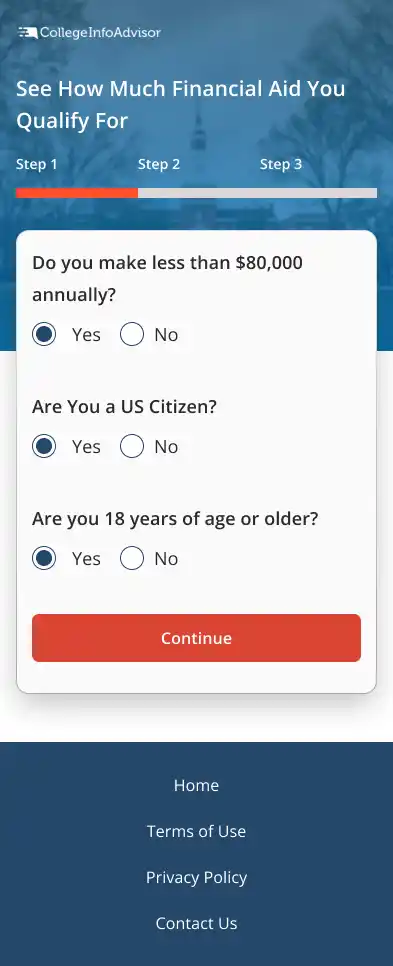
  • Segmentation
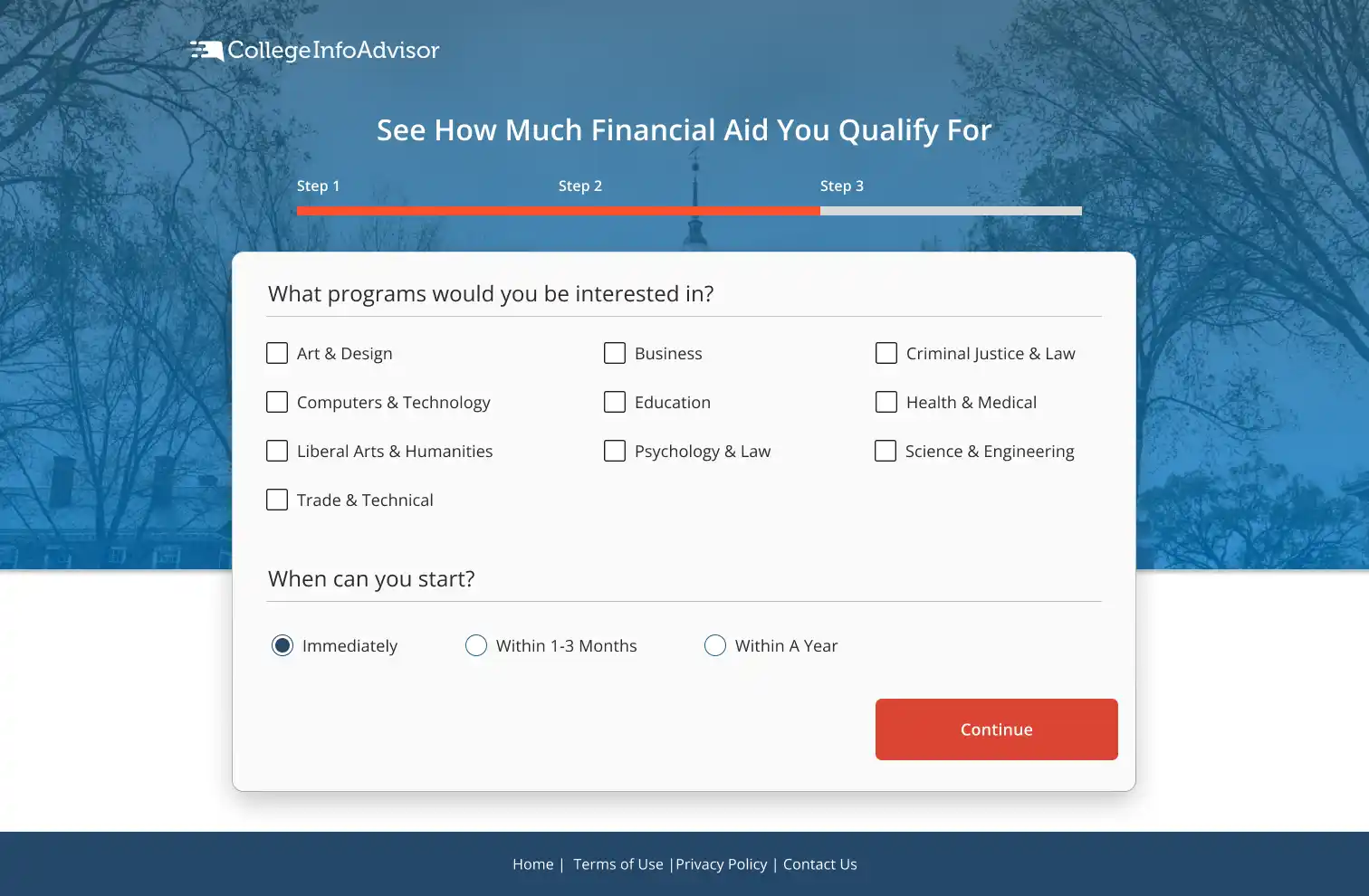
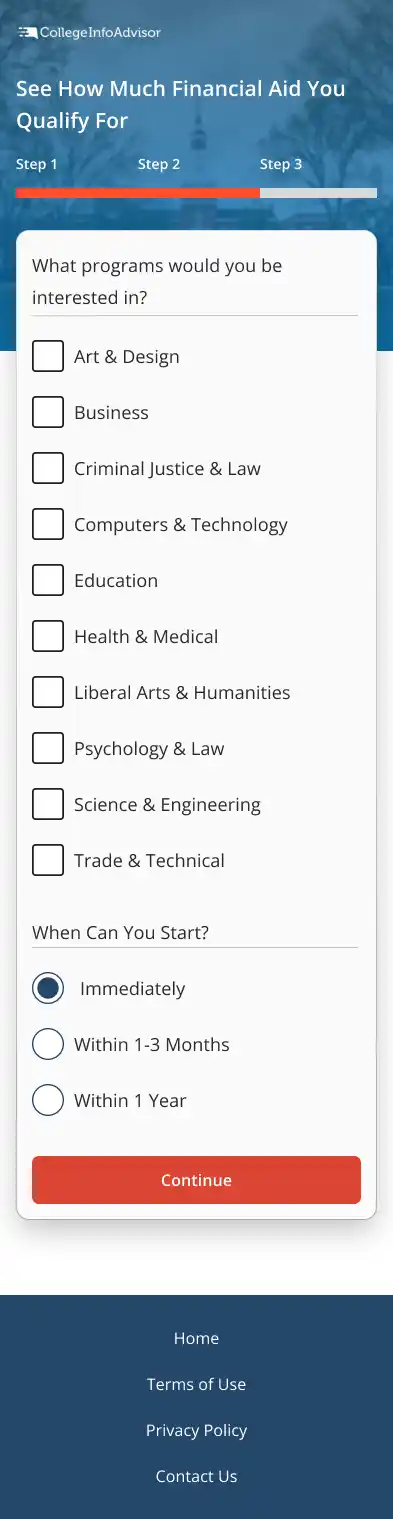
    Captured financing eligibility, program interest, and time to enroll to power more personalized campaigns and improve downstream matching.

  • Real-Time Email Validation
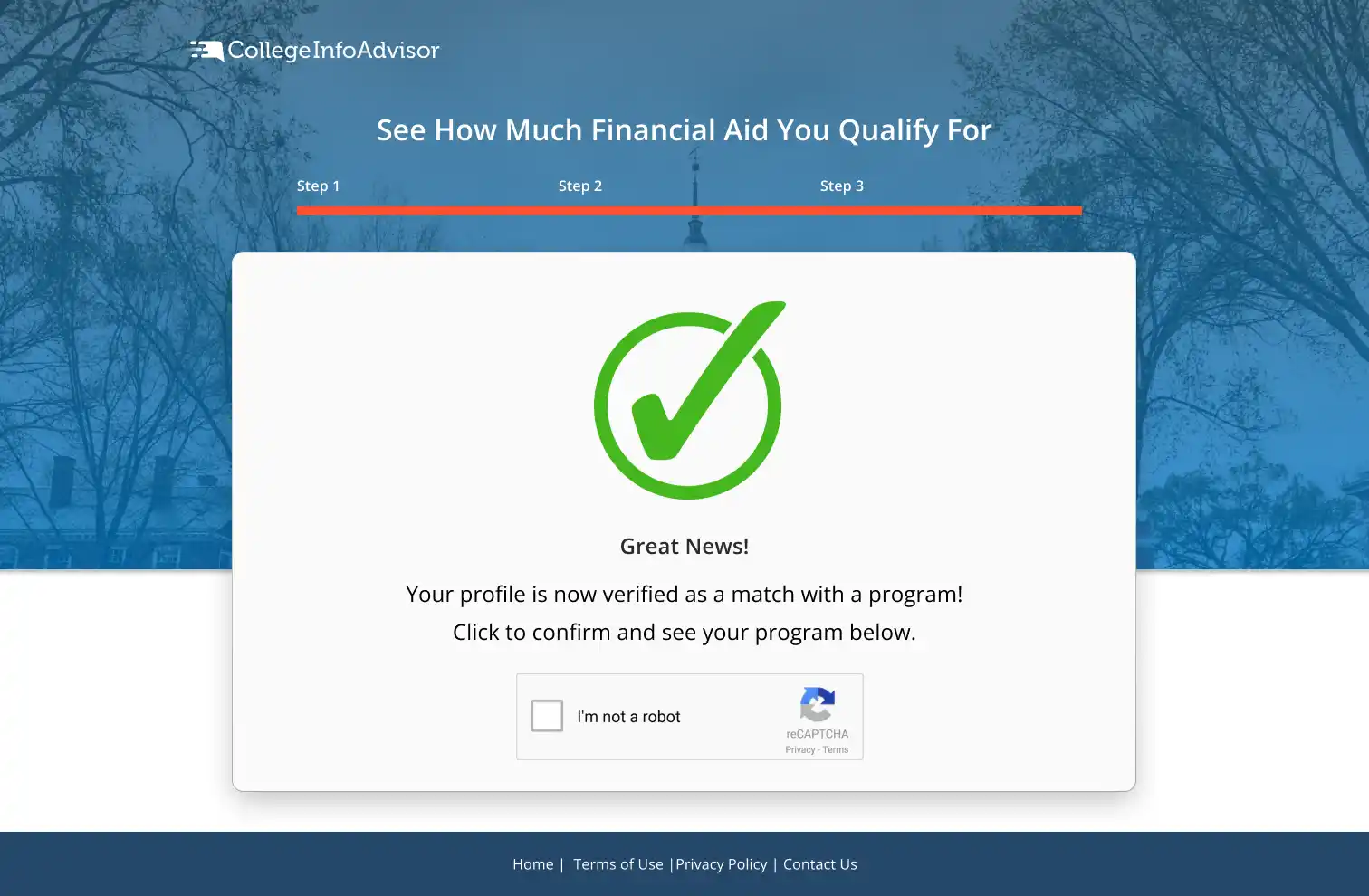
    Integrated the Email Oversight API to block fake or invalid emails at the point of entry.
    Result: Reduced bad leads by 45%

  • Custom IP Filtering
    Flagged low-quality traffic (IPs that are on our internal blacklist we created, or from ineligible countries) and rerouted them to alternative offers.
    Result: Protected advertiser lead quality while still monetizing lower-fit users

This system-level shift aligned us more closely with advertiser expectations, improved enrollment outcomes, and helped preserve our monthly lead caps—safeguarding our most valuable revenue streams.

Filtering for Fit, Not Just Volume

To ensure long-term success with advertisers, we rebuilt our lead qualification system—shifting the focus from raw volume to quality.

Core Improvements:

  • Segmentation
    Captured financing eligibility, program interest, and time to enroll to power more personalized campaigns and improve downstream matching.

  • Real-Time Email Validation
    Integrated the Email Oversight API to block fake or invalid emails at the point of entry.
    Result: Reduced bad leads by 45%

  • Custom IP Filtering
    Flagged low-quality traffic (IPs that are on our internal blacklist we created, or from ineligible countries) and rerouted them to alternative offers.
    Result: Protected advertiser lead quality while still monetizing lower-fit users

This system-level shift aligned us more closely with advertiser expectations, improved enrollment outcomes, and helped preserve our monthly lead caps—safeguarding our most valuable revenue streams.

Filtering for Fit, Not Just Volume

To ensure long-term success with advertisers, we rebuilt our lead qualification system—shifting the focus from raw volume to quality.

Core Improvements:

  • Segmentation
    Captured financing eligibility, program interest, and time to enroll to power more personalized campaigns and improve downstream matching.

  • Real-Time Email Validation
    Integrated the Email Oversight API to block fake or invalid emails at the point of entry.
    Result: Reduced bad leads by 45%

  • Custom IP Filtering
    Flagged low-quality traffic (IPs that are on our internal blacklist we created, or from ineligible countries) and rerouted them to alternative offers.
    Result: Protected advertiser lead quality while still monetizing lower-fit users

This system-level shift aligned us more closely with advertiser expectations, improved enrollment outcomes, and helped preserve our monthly lead caps—safeguarding our most valuable revenue streams.

Quality Control Flow
Segmentation (Desktop)
Segmentation (Mobile)
Growth Engine

Scaling Impact with High-Performing Features

Growth Engine

Scaling Impact with High-Performing Features

Growth Engine

Scaling Impact with High-Performing Features

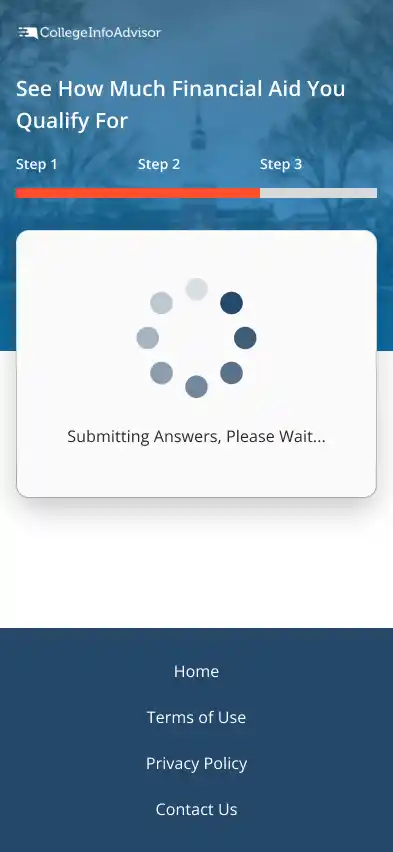
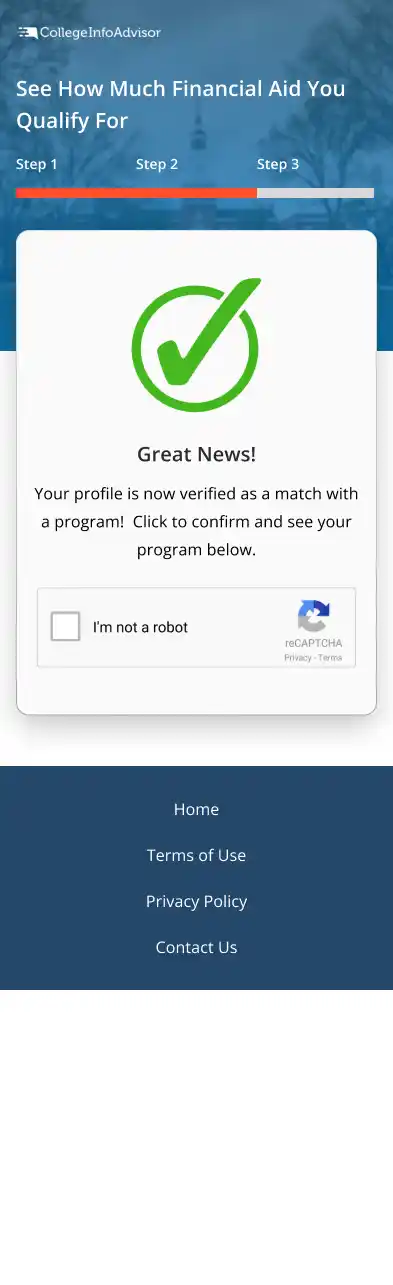
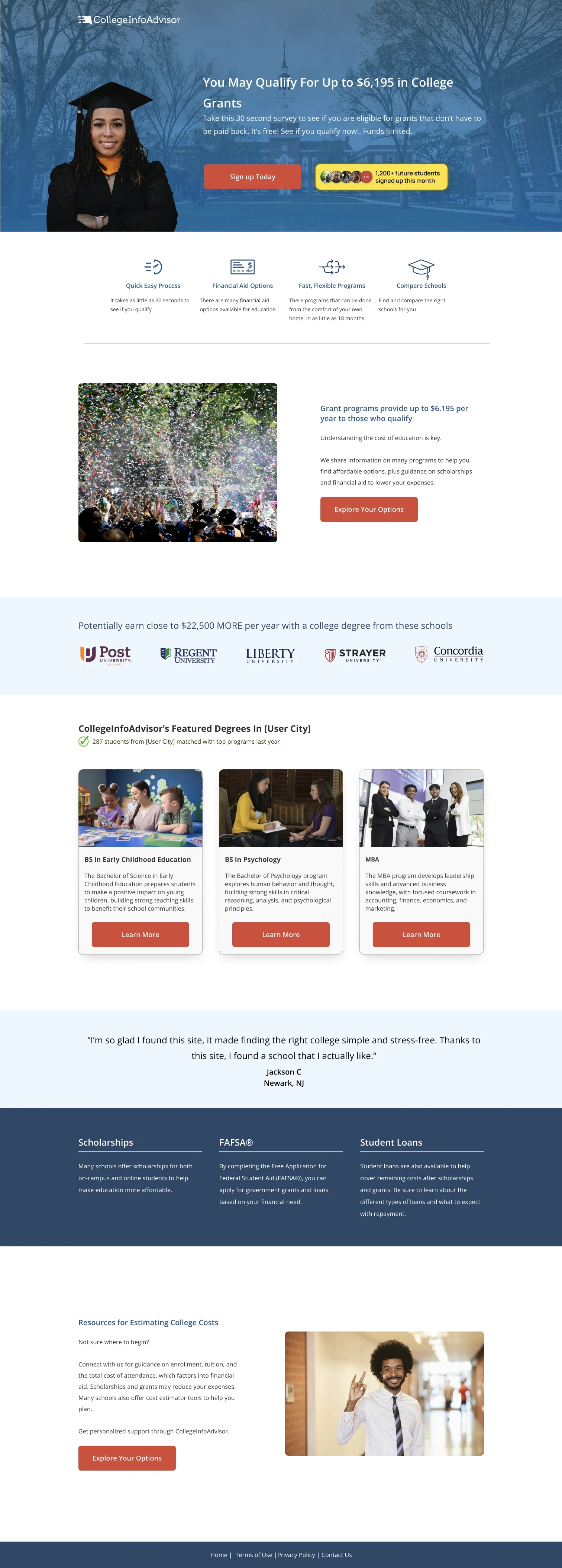
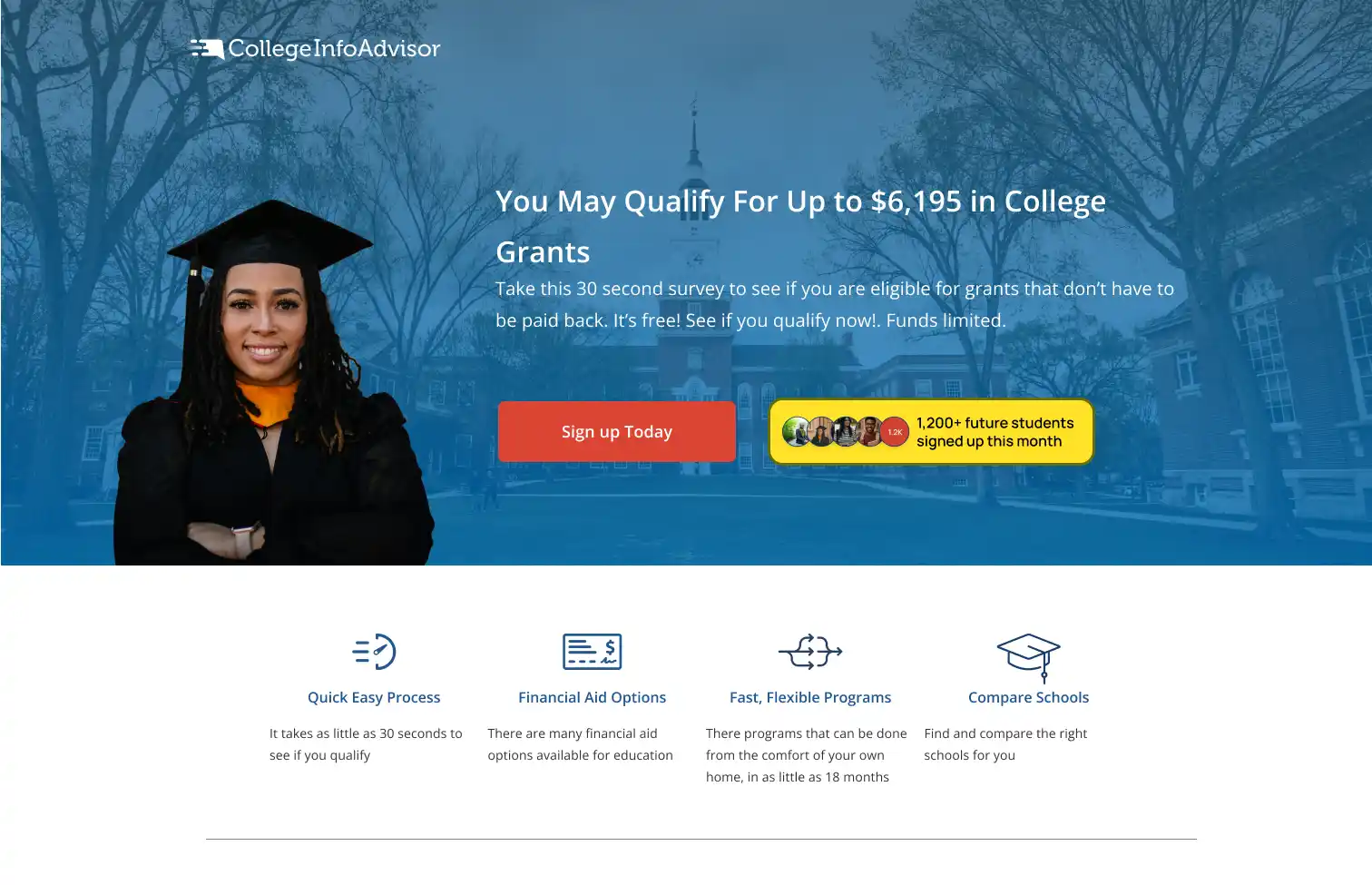
With a solid, high-quality foundation, we started adding features designed to build trust and encourage sign-ups.

  • Personalized Recommendations: We used a person's location and interests to suggest relevant programs. This simple change increased enrollments by 12%.

  • Social Proof: We added conversion counters, live notifications when someone has signed up, and real student quotes. This lifted conversions by 11%.

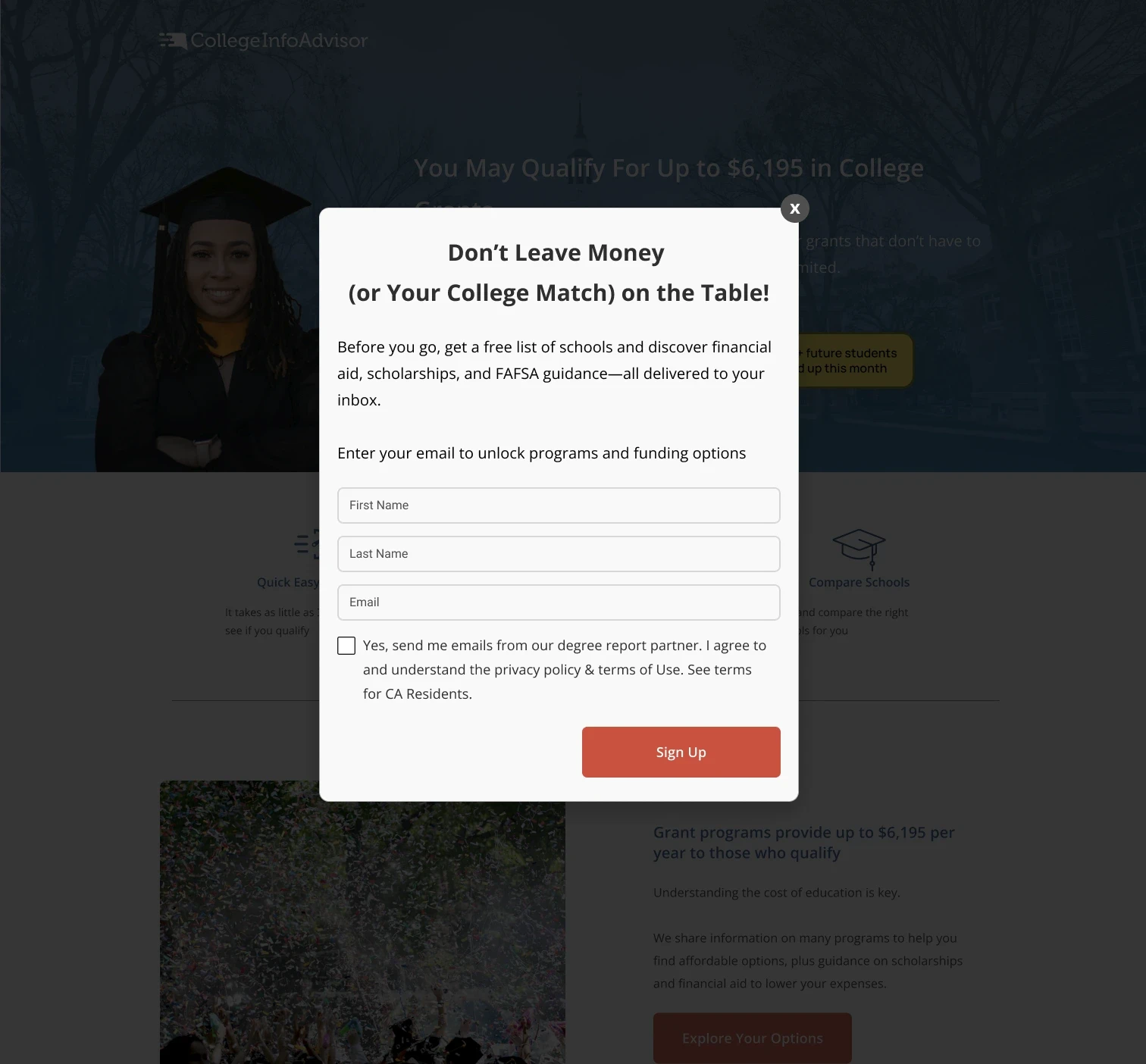
  • Smart Reminders: If someone started to sign up but didn't finish, we used a friendly pop-up or a follow-up email to bring them back. This simple feature recovered 18% of users who would have been lost.

With a solid, high-quality foundation, we started adding features designed to build trust and encourage sign-ups.

  • Personalized Recommendations: We used a person's location and interests to suggest relevant programs. This simple change increased enrollments by 12%.

  • Social Proof: We added conversion counters, live notifications when someone has signed up, and real student quotes. This lifted conversions by 11%.

  • Smart Reminders: If someone started to sign up but didn't finish, we used a friendly pop-up or a follow-up email to bring them back. This simple feature recovered 18% of users who would have been lost.

With a solid, high-quality foundation, we started adding features designed to build trust and encourage sign-ups.

  • Personalized Recommendations: We used a person's location and interests to suggest relevant programs. This simple change increased enrollments by 12%.

  • Social Proof: We added conversion counters, live notifications when someone has signed up, and real student quotes. This lifted conversions by 11%.

  • Smart Reminders: If someone started to sign up but didn't finish, we used a friendly pop-up or a follow-up email to bring them back. This simple feature recovered 18% of users who would have been lost.

Full Page
Conversion Features
Business Impact

Business Impact

Business Impact

Over three years, our focus on quality created a powerful, sustainable growth engine.

  • $9M+ in cumulative revenue.

  • 3x revenue growth.

  • 40-60% increase in user opt-in rates.

  • 15-18% increase in client enrollment rates.

  • 70% drop in complaints from users

Most importantly, we built a repeatable playbook that allowed us to expand into new industries like healthcare, IT, and financial services with confidence and success.

Over three years, our focus on quality created a powerful, sustainable growth engine.

  • $9M+ in cumulative revenue.

  • 3x revenue growth.

  • 40-60% increase in user opt-in rates.

  • 15-18% increase in client enrollment rates.

  • 70% drop in complaints from users

Most importantly, we built a repeatable playbook that allowed us to expand into new industries like healthcare, IT, and financial services with confidence and success.

Over three years, our focus on quality created a powerful, sustainable growth engine.

  • $9M+ in cumulative revenue.

  • 3x revenue growth.

  • 40-60% increase in user opt-in rates.

  • 15-18% increase in client enrollment rates.

  • 70% drop in complaints from users

Most importantly, we built a repeatable playbook that allowed us to expand into new industries like healthcare, IT, and financial services with confidence and success.

What I Learned

What I Learned

What I Learned

  1. Good Design is Good Business. Every improvement we made, from a clearer button to a smarter filter, directly impacted our bottom line.

  2. Quality Beats Quantity. Focusing on getting the right customers became our single biggest lever for growth.

  3. Consistency Compounds. A steady rhythm of small, data-driven improvements led to massive gains over time.

  4. Serve Both Sides of the Market. Our success depended on creating a great experience for both the students looking for help and the advertisers looking for results.

  1. Good Design is Good Business. Every improvement we made, from a clearer button to a smarter filter, directly impacted our bottom line.

  2. Quality Beats Quantity. Focusing on getting the right customers became our single biggest lever for growth.

  3. Consistency Compounds. A steady rhythm of small, data-driven improvements led to massive gains over time.

  4. Serve Both Sides of the Market. Our success depended on creating a great experience for both the students looking for help and the advertisers looking for results.

  1. Good Design is Good Business. Every improvement we made, from a clearer button to a smarter filter, directly impacted our bottom line.

  2. Quality Beats Quantity. Focusing on getting the right customers became our single biggest lever for growth.

  3. Consistency Compounds. A steady rhythm of small, data-driven improvements led to massive gains over time.

  4. Serve Both Sides of the Market. Our success depended on creating a great experience for both the students looking for help and the advertisers looking for results.